Leave Your Message
-
Phone
-
E-mail
-
Whatsapp
-
Whatsapp

Choosing a Portable Cpap Machine requires more than comparing weight, price, and battery life. The right device must support effective therapy during flights, road trips, and quiet nights away from home.
The need is substantial. A Lancet Respiratory Medicine analysis estimated that 936 million adults aged 30–69 have mild-to-severe obstructive sleep apnea worldwide. About 425 million may have moderate-to-severe disease. These figures show the scale, but they do not identify the best machine for each sleeper.
The American Academy of Sleep Medicine recommends positive airway pressure therapy for appropriate adults with obstructive sleep apnea. Dr. Douglas Kirsch, a sleep-medicine specialist and former AASM president, has described CPAP as “the gold standard treatment for obstructive sleep apnea.” That principle still matters when choosing a compact model. Portability should never replace therapeutic accuracy.
Look closely at noise levels, pressure settings, mask compatibility, battery options, humidification, warranty coverage, and clinical support. A lighter machine may be easier to pack, yet its smaller water chamber could create uncomfortable dryness. A long battery rating may also change in cold weather or with heated humidification. Small details matter.
This guide compares the practical compromises behind each Portable Cpap Machine. It also questions a common assumption: the smallest device is not automatically the best travel companion. Your prescription, sleeping position, destination, and daily routine should shape the final decision. A clinician should confirm that the selected device delivers suitable therapy.
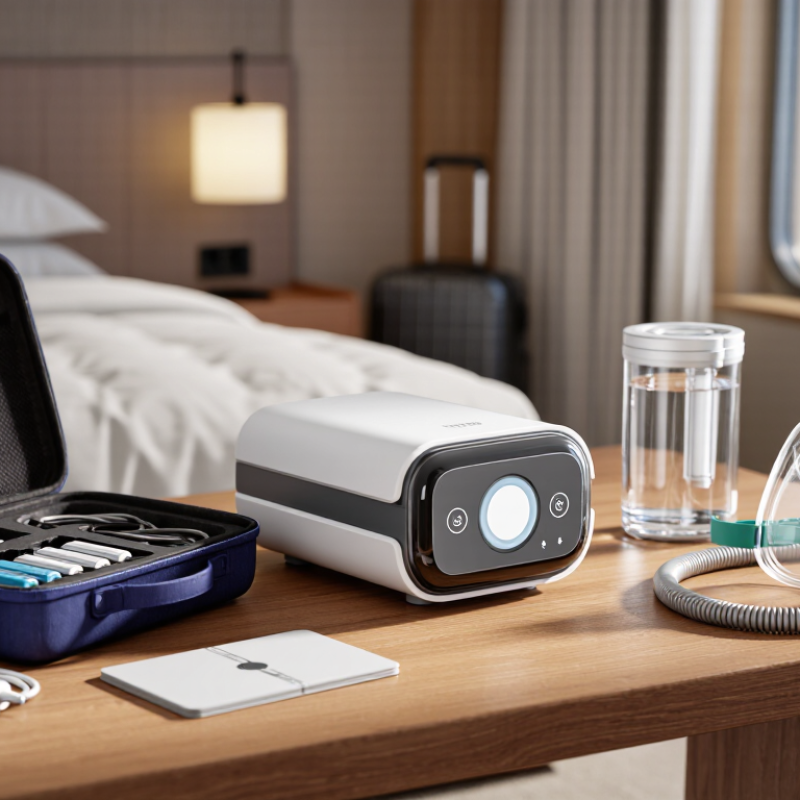
How to Choose a Portable CPAP Machine?
Define Your Portable CPAP Travel and Sleep Therapy Needs
Start with your actual routine, not the machine’s smallest dimensions. Will you use it on flights, in hotels, or beside a tent? Check battery duration, voltage compatibility, water requirements, noise, and cleaning demands. A device that fits in a suitcase may still fail during a long airport delay. Weight matters, but dependable therapy matters more.
The 2019 Lancet Sleep Medicine analysis estimated that 936 million adults worldwide have mild-to-severe obstructive sleep apnea. That scale makes personal treatment decisions important, not cosmetic. The American Academy of Sleep Medicine recommends PAP therapy for adults with obstructive sleep apnea when clinically appropriate. Your prescribed pressure range, mask type, humidification needs, and data reporting should guide the choice. A sleep clinician can confirm whether an automatic mode is suitable for you.
Do not assume smaller means better. It may mean fewer comfort features, limited humidification, or difficult controls. I would also question advertised battery claims. They can change with pressure settings, heated tubing, altitude, and temperature. The U.S. Federal Aviation Administration advises passengers to check airline requirements for portable medical equipment before flying. Keep your prescription and treatment records accessible. A practical trial at home can reveal problems early: dry mouth, rainout, loose connections, or poor sleep after one night. Travel convenience is useful, but consistent therapy remains the real measure.
| Decision Dimension | Travel Requirement | Sleep Therapy Requirement | Useful Specification or Feature | Selection Guidance |
|---|---|---|---|---|
| Primary Use | Frequent flights, road trips, camping, or hotel stays. | Nightly treatment for diagnosed obstructive sleep apnea. | Portable CPAP or automatic positive airway pressure mode, depending on the prescribed therapy. | Choose a travel-focused model only if it still supports the therapy settings prescribed by a qualified clinician. |
| Device Weight | Lower weight reduces carry-on load and is useful for walking or outdoor travel. | Weight is less important when the device remains on a bedside table. | Compare the device weight separately from the power supply, humidifier, tubing, mask, and travel case. | For frequent travelers, prioritize the complete packed system weight rather than the machine weight alone. |
| Packed Size | Small dimensions help the equipment fit into a personal bag or compact carry-on. | Compact size should not compromise adequate airflow or comfortable mask use. | Check the packed dimensions, hose connection position, and available storage case. | Measure the space in your luggage before buying, including room for cables and accessories. |
| Power Supply | Travel may involve aircraft cabins, vehicles, hotels, or locations without reliable mains electricity. | The machine must receive stable power for the entire sleep period. | Verify the input voltage range, plug compatibility, DC operation, and whether a battery is supported. | Use only an approved power solution and confirm airline rules before carrying or using a battery. |
| Battery Runtime | Important for camping, remote locations, and unexpected power interruptions. | Runtime should cover the intended sleep duration; actual performance varies with pressure, breathing, temperature, and humidification. | Battery capacity is commonly stated in watt-hours or ampere-hours; runtime should be confirmed under real operating conditions. | Do not estimate runtime from capacity alone, and avoid assuming that heated humidification will work normally on battery power. |
| Pressure Range | Portable size does not replace the need for correct treatment pressure. | Many CPAP systems provide a pressure range of approximately 4–20 cmH₂O, but the prescribed setting may be narrower. | Fixed CPAP provides one set pressure; automatic PAP adjusts pressure within a clinician-defined range. | Never change therapeutic pressure settings without professional guidance. |
| Therapy Mode | A simple mode may be easier to operate while traveling. | Some users require CPAP, auto-adjusting PAP, bilevel therapy, or another prescribed mode. | Confirm whether the device supports the exact therapy mode documented in the prescription. | Portability is secondary to compatibility with the required treatment mode. |
| Humidification | Water tanks can add weight, require cleaning, and may be inconvenient during air travel or camping. | Humidification can reduce dryness or nasal irritation for some users, but it is not essential for everyone. | Options may include integrated humidification, optional humidification, or no humidifier. | If you often travel light, consider a design that can operate without a water chamber while preserving comfort. |
| Mask Compatibility | Standard connections make it easier to carry a familiar mask and replace accessories during a trip. | The mask must provide a stable seal and comfortable fit for the prescribed therapy. | Check connector compatibility, tubing type, mask venting requirements, and availability of replacement parts. | Use the mask that has been fitted and tested for you rather than selecting a device based only on its size. |
| Noise Level | Low operating noise is valuable in shared rooms, cabins, and hotel rooms. | Noise can affect sleep quality and bed-partner comfort even when therapy is effective. | Compare manufacturer-reported sound levels using the same measurement conditions; perceived noise may differ. | Look for independent user testing when available, but treat laboratory noise figures as comparative rather than absolute. |
| Altitude and Climate | Mountain travel, hot climates, cold environments, and high humidity can affect comfort and operation. | Stable airflow and reliable sensing are important across the environments where therapy will be used. | Review the stated operating temperature, humidity, and altitude limits. | Keep the machine dry, protect it from extreme temperatures, and follow the operating limits in the user manual. |
| Data and Monitoring | Remote trips may make it harder to contact a clinician or troubleshoot therapy problems. | Usage hours, leak information, and event data can help a clinician assess treatment performance. | Possible options include an internal memory card, wireless connectivity, or basic usage reporting. | Select the data features needed for follow-up care and confirm how data can be shared securely. |
| Cleaning and Maintenance | Travel limits access to clean water, drying space, and replacement supplies. | Regular cleaning helps maintain hygiene and may reduce odor or equipment buildup. | Consider removable components, washable tubing, filter replacement intervals, and drying requirements. | Choose a system whose cleaning routine you can realistically follow while away from home. |
| Durability and Protection | Frequent packing, baggage handling, dust, and movement increase the risk of damage. | The machine should maintain dependable performance over regular nightly use. | Look for a protective case, secure connections, replaceable filters, and clearly stated warranty terms. | Carry the device in hand luggage when possible and protect it from impact, moisture, and extreme heat. |
| Regulatory and Airline Considerations | Airlines and countries may have different rules for medical equipment and lithium batteries. | Travel documentation can help explain the medical purpose of the equipment. | Check airline requirements, battery documentation, security-screening procedures, and destination voltage standards. | Plan in advance and carry the prescription or medical documentation recommended by your clinician and airline. |
| Total Cost of Ownership | Travel accessories may include a case, battery, adapters, spare filters, and extra tubing. | Ongoing costs may include masks, cushions, filters, tubing, and other replacement supplies. | Compare the initial price with accessory costs, replacement intervals, power requirements, and service support. | Evaluate the complete travel kit and recurring supply costs instead of comparing machine prices alone. |
Important: Portable CPAP equipment should be selected and configured for an individual’s diagnosed sleep-disordered breathing condition. Confirm therapy mode, pressure settings, mask fit, and battery use with a qualified sleep clinician. Product specifications and travel regulations can change, so verify the latest information in the device manual and with the relevant airline or transportation authority.