Top 5 Pulse Oximeters to Explore at Canton Fair 2026?
The Pulse Oximeter market is rapidly evolving, with significant growth projected over the next few years. According to a recent report by MarketsandMarkets, the global pulse oximeter market is expected to reach USD 2.16 billion by 2025, growing at a CAGR of 7.8%. This growth is driven by an increasing prevalence of respiratory diseases and a rising aging population. As more consumers seek advanced health monitoring tools, pulse oximeters have gained popularity.
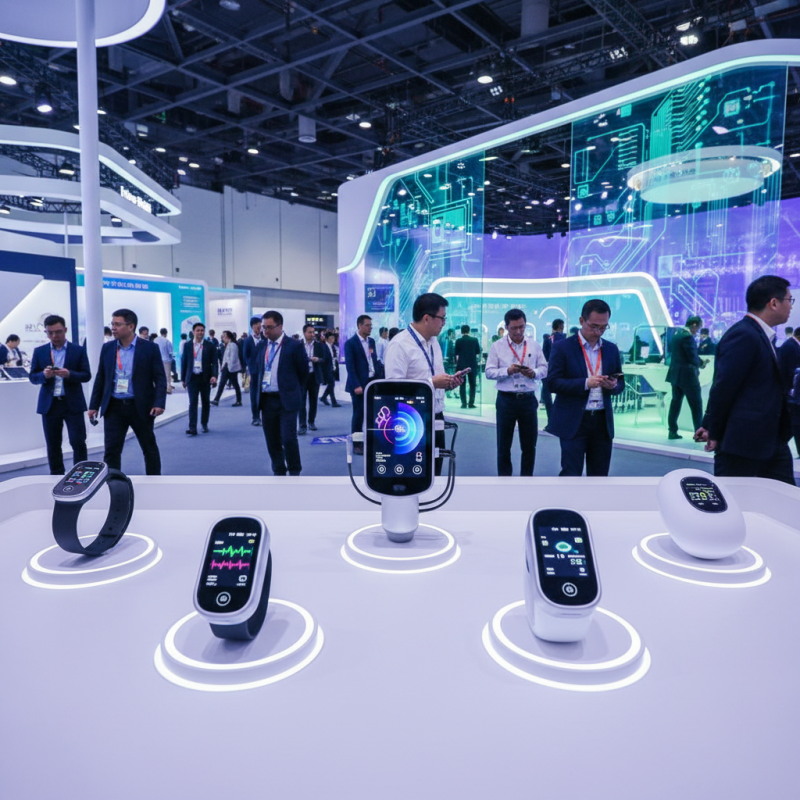
At the 2026 Canton Fair, buyers will encounter a variety of innovative pulse oximeters. The emphasis will be on advanced manufacturing and electronic appliances in the first phase of the fair. Incorporating AI technology, exhibitors will showcase devices that cater to specific certifications like ISO and CE. Efficient navigation through the massive venue of 1.55 million square meters will enhance the overall experience for attendees, allowing them to explore new products thoroughly.
However, as the demand rises, manufacturers must reflect on quality control and device accuracy. With growing competition, not every product will meet the high expectations of healthcare professionals and consumers alike. Attendees should be discerning and aim to find devices that not only promise accuracy but also demonstrate reliability in real-world scenarios.
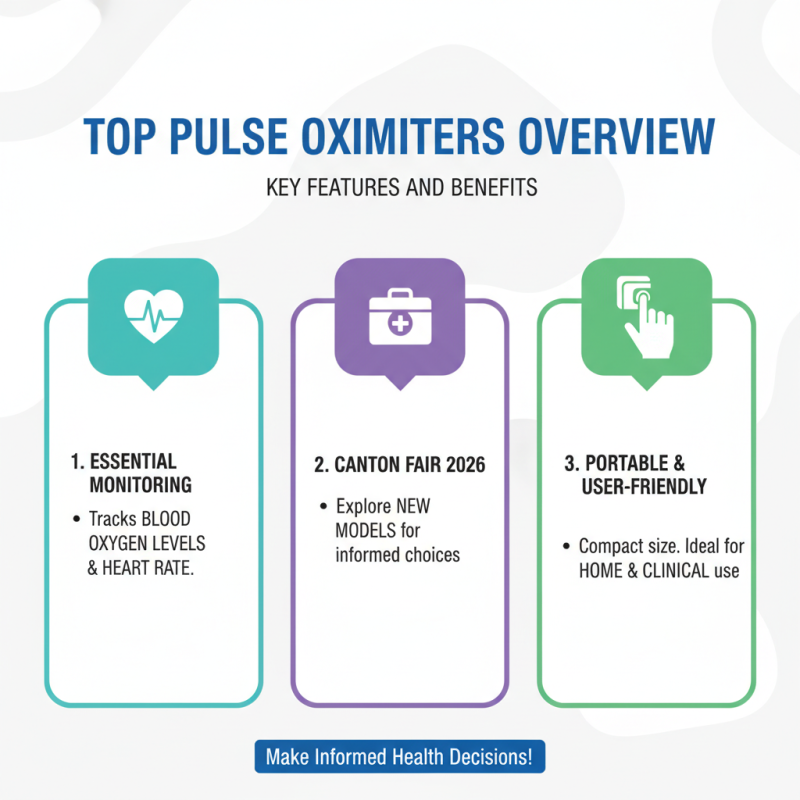
Top Pulse Oximeters Overview: Key Features and Benefits
Pulse oximeters are essential tools for monitoring blood oxygen levels. At the Canton Fair 2026, exploring top models can help you make informed choices. These devices are compact and portable. Many are user-friendly, making them ideal for home use and clinical settings alike.
One key feature to look for is accuracy. A reliable pulse oximeter should provide precise readings. A bright display enhances visibility, even in low-light settings. Consider battery life when choosing a model; long-lasting batteries can make a big difference during travel or emergencies.
**Tip:** Always check if the device is FDA-approved. This can assure its reliability and safety.
Some models offer Bluetooth connectivity. This enables data tracking on smartphones. Yet, being reliant on technology can lead to user frustration. It's important to balance convenience with usability. Reading reviews can provide insights into real-world performance.
**Tip:** Test devices at trade shows. This can help you understand their functionality better. Make sure they feel comfortable and intuitive.
Market Trends: Rising Demand for Pulse Oximeters in Healthcare
The rising demand for pulse oximeters in healthcare reflects a significant market trend. These devices measure blood oxygen levels accurately. They are crucial for patients with respiratory issues. Their portability makes them essential for both hospitals and home care.
Healthcare professionals increasingly rely on these tools. Monitoring oxygen saturation is vital during respiratory illnesses. The demand has surged, especially after recent global health challenges. Patients want reliable data at their fingertips. Many people recognize the importance of tracking their health daily.
Despite their popularity, issues remain. Some users struggle with understanding the data. Misinterpretations can lead to unnecessary anxiety. There is a need for better user education. As the market grows, addressing these challenges will ensure pulse oximeters reach their full potential.
Technical Specifications: What to Look for in a Quality Pulse Oximeter
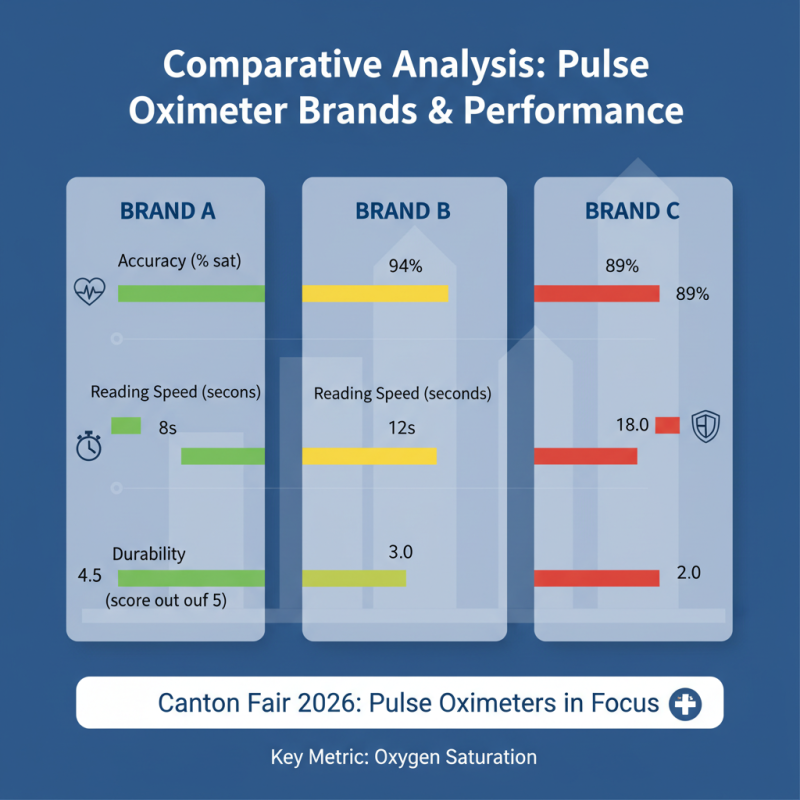
When exploring pulse oximeters, understanding technical specifications is crucial. These devices measure blood oxygen saturation, crucial for monitoring respiratory conditions. Many models feature accuracy within 2%, a benchmark for quality. The best devices report readings quickly, often under 10 seconds. While speed matters, reliability is vital. Some choices fail to provide consistent results.
Consider the display quality. A clear, bright screen aids readability. This is essential in low-light situations. A study found that 30% of users struggle with poor displays during emergencies. Battery life is another concern. Many models last under 20 hours. This could hamper prolonged usage, especially in clinical settings.
Portability also plays a role. Some devices weigh less than 100 grams. This can make a difference for on-the-go professionals. However, not all portable models maintain high accuracy. Users may find themselves compromising on precision for convenience. Understanding these aspects can lead to better decision-making. Quality matters above all.
Top 5 Pulse Oximeters to Explore at Canton Fair 2026
| Model |
Oxygen Saturation Range (% SpO2) |
Pulse Rate Range (bpm) |
Battery Life (hours) |
Weight (grams) |
| Model A |
70% - 100% |
30 - 250 |
30 |
50 |
| Model B |
80% - 100% |
40 - 200 |
24 |
55 |
| Model C |
75% - 100% |
35 - 210 |
40 |
60 |
| Model D |
85% - 100% |
50 - 220 |
36 |
52 |
| Model E |
60% - 100% |
35 - 240 |
28 |
48 |
User Feedback: Insights from Healthcare Professionals on Oximeter Reliability
Healthcare professionals play a crucial role in assessing the reliability of pulse oximeters. They rely on these devices to monitor patients’ oxygen levels accurately. User feedback highlights the importance of accuracy in readings. Many professionals express concerns about variations between devices. Some oximeters provide inconsistent results, raising questions about their reliability in critical situations.
Durability and ease of use are other key factors mentioned by users. Professionals appreciate when devices are robust, withstanding daily wear and tear. Simplicity in operation is essential during emergencies. Some report struggles with complicated interfaces. This can lead to delays in patient care. Professionals recommend devices that are intuitive and easy to navigate.
Moreover, battery life is a critical aspect that often gets overlooked. Several users report dissatisfaction with short battery duration. Frequent recharging can be cumbersome in busy environments. Professionals urge manufacturers to prioritize longer-lasting batteries. They believe this can greatly enhance the utility of pulse oximeters in healthcare settings.