Leave Your Message

China Best Oxygen Concentrator Machine Manufacturers?

Choosing the China Best Oxygen Concentrator Machine Manufacturers requires more than comparing prices or factory photographs. A dependable supplier must demonstrate oxygen purity, flow stability, noise control, electrical safety, and consistent after-sales support. In a clinic, a weak compressor can turn into an alarming bedside problem. The details matter.

The World Health Organization identifies medical oxygen as an essential treatment, especially for respiratory emergencies and chronic lung disease. WHO Director-General Dr. Tedros Adhanom Ghebreyesus stated, “Oxygen is an essential medicine, and access to it can be a matter of life and death.” This principle should guide every purchasing decision. An Oxygen Concentrator Machine is not simply another medical appliance.

Recent market studies show strong demand. Grand View Research reported that the global oxygen concentrators market was valued at approximately USD 2.6 billion in 2023, with continued growth expected through 2030. Fortune Business Insights also links market expansion to home healthcare, aging populations, and rising respiratory disorders. However, estimates differ between reports. Market numbers are not perfect.

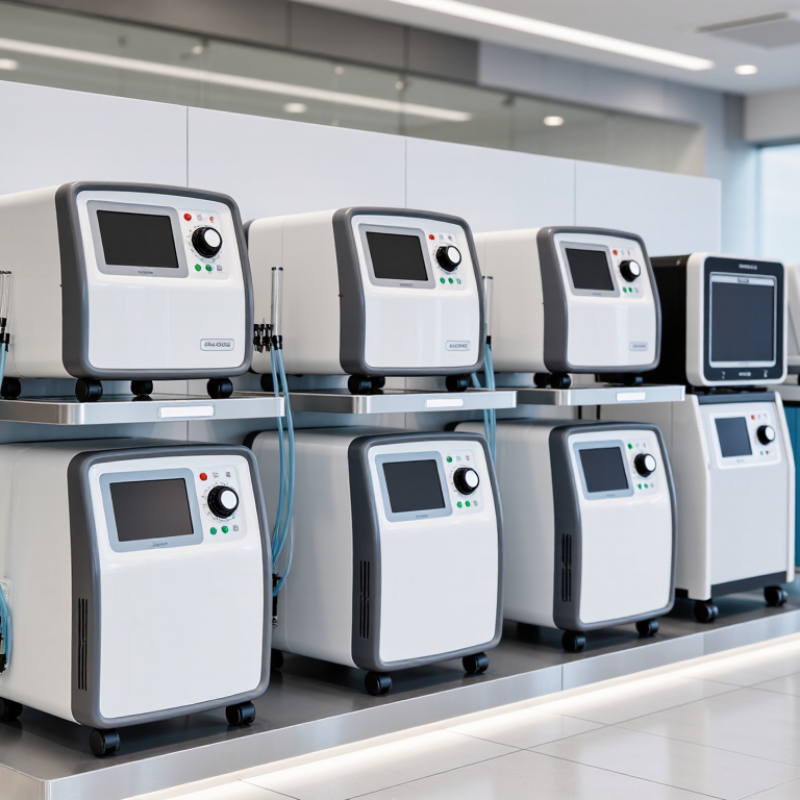
This guide examines Chinese manufacturers through practical evidence, including ISO 13485 certification, CE or FDA documentation where applicable, oxygen concentration test records, warranty terms, production capacity, and independent user feedback. Buyers should request recent test reports, not only certificates displayed online. A polished showroom proves little. Factory audits, sample testing, and service-response checks reveal more.

Some manufacturers excel at compact home units. Others perform better with high-flow hospital systems or OEM projects. The best choice depends on clinical needs, destination requirements, budget, and maintenance access. No single ranking is universally correct. Reliable evaluation requires careful questions, transparent evidence, and a willingness to reconsider attractive claims.

China Best Oxygen Concentrator Machine Manufacturers?

What Are Oxygen Concentrator Machines and How Do They Work?

China Best Oxygen Concentrator Machine Manufacturers?

What Are Oxygen Concentrator Machines and How Do They Work?

An oxygen concentrator is a medical device that produces enriched oxygen from room air. It does not store oxygen in a cylinder. Instead, a compressor pushes air through molecular sieve beds, usually containing zeolite. These beds capture nitrogen. The remaining gas contains a higher oxygen concentration and reaches the patient through tubing.

The process repeats through timed valve changes. One sieve bed works while the other releases trapped nitrogen. The device needs electricity, clean filters, and adequate airflow. According to the WHO-UNICEF Technical Specifications and Guidance for Oxygen Therapy Devices, acceptable concentrators commonly deliver 82% to 96% oxygen at rated flow. Output can decline when flow increases, filters clog, or power becomes unstable.

The U.S. Food and Drug Administration explains that concentrators require clinical guidance and suitable prescription settings. A machine rated at five litres per minute may not perform equally under every load. That detail is easy to miss. Manufacturers should therefore document oxygen purity, flow accuracy, alarm functions, noise levels, and performance during voltage changes. ISO 80601-2-69 also provides safety requirements for oxygen concentrators. Buyers should request independent test reports, service records, and replacement-part information. No specification sheet replaces real clinical validation.

Why Choose Chinese Oxygen Concentrator Manufacturers?

China Best Oxygen Concentrator Machine Manufacturers?

Chinese oxygen concentrator manufacturers attract global buyers through mature medical-device supply chains and flexible production capacity. Many factories support private-label projects, custom housing designs, and different flow-rate requirements. Their engineers commonly work with PSA technology, molecular sieve systems, compressors, alarms, and oxygen purity sensors. These details matter in clinics, home-care settings, and emergency transport.

A practical factory audit can reveal more than a sales presentation. Buyers should inspect assembly lines, calibration records, noise testing, and final oxygen-purity checks. Reliable manufacturers usually provide traceable serial numbers, user manuals, maintenance guidance, and documented quality procedures. Certifications such as ISO 13485 or market-specific approvals can support confidence, but certificates must be verified carefully. Paperwork alone does not prove consistent performance.

Chinese suppliers can also reduce lead times through established component networks and nearby technical teams. This may simplify spare-parts planning and product revisions. However, the lowest quotation deserves caution. It may reflect thinner testing, weaker after-sales support, or unstable component quality. Not every factory operates at the same level. Buyers should request sample units, compare test results, review complaint handling, and clarify warranty responsibilities before ordering. A small weakness in fan noise or alarm accuracy can become significant during daily use. Some manufacturers improve quickly after feedback; others resist it. That difference often appears during technical discussions.

How to Evaluate China’s Best Oxygen Concentrator Suppliers?

Evaluating China’s best oxygen concentrator suppliers requires more than comparing online prices. Check whether the supplier operates a real production facility. Request factory photos, production records, and recent quality inspection reports. A polished showroom can still hide weak process control. Ask how each unit is tested before shipment.

Review technical specifications carefully. Confirm oxygen concentration at different flow rates, operating noise, power consumption, alarm functions, and expected service life. The supplier should provide clear test methods, not only attractive numbers. Examine certificates, quality management records, and compliance documents required in your target market. These documents should match the actual manufacturer and product model.

Request a sample for independent testing. Measure oxygen output after continuous operation, because performance may change when the machine becomes warm. Inspect filters, tubing, connectors, and the user interface. Ask about spare parts, warranty response time, training, and fault diagnosis. Traceable serial numbers matter. So does packaging.

Communication also reveals technical maturity. Reliable suppliers answer specific questions with evidence and admit product limitations. Vague replies deserve caution. I would also compare two or three production batches, although this takes more time. One sample cannot represent every shipment. Price remains important, but a low quotation may exclude testing, service, or replacement components. That detail is easy to miss.

Which Certifications Ensure Safe and Reliable Oxygen Concentrators?

For China-based oxygen concentrator manufacturers, certifications should prove more than factory competence. They should demonstrate controlled design, tested safety, and consistent oxygen output.

ISO 13485 confirms a medical-device quality system, but it does not certify every machine. ISO 14971 shows that risks, including low oxygen concentration and alarm failure, are assessed. IEC 60601-1 covers electrical safety. IEC 60601-1-2 addresses electromagnetic compatibility. The product-specific standard, ISO 80601-2-69, is especially important for oxygen concentrators. CE marking may support European sales, yet buyers should verify the notified body and certificate scope. A logo alone proves little.

Check the test evidence.

The WHO and UNICEF Technical Specifications for Oxygen Concentrators state that outlet concentration should remain around 82%–96% under specified operating conditions. Ask manufacturers for test results at different flow rates, after warm-up, and during voltage changes. Confirm alarm testing, filter replacement intervals, noise levels, and continuous-runtime results. IEC 60601 testing should include leakage current and abnormal operation, not only normal use. These details often separate reliable equipment from attractive paperwork.

I would also inspect calibration records and production samples. One certificate can look perfect while a later batch performs differently. That is an uncomfortable possibility, but it deserves attention. Independent laboratory reports, traceable serial numbers, and post-market complaint procedures provide stronger evidence than marketing claims.

Sources: WHO and UNICEF, Technical Specifications for Oxygen Concentrators; FDA Recognized Consensus Standards Database; ISO 13485 and ISO 14971.

How to Select the Right Chinese Manufacturer for Your Needs?

Choosing the right Chinese oxygen concentrator manufacturer requires more than comparing online prices. Check whether the factory produces medical devices regularly, not only through trading companies. Request an ISO 13485 certificate and verify its validity with the issuing body. For your target market, confirm applicable product registrations, electrical safety reports, and labeling requirements. Documents should match the exact model you plan to purchase.

Test samples under realistic conditions. Measure oxygen concentration at different flow rates, not only at startup. Listen to the compressor in a quiet room. Check alarms, filter access, power stability, and heat output after several hours. Ask for test records, batch traceability, and a written quality-control process. A factory visit can reveal storage conditions, assembly cleanliness, and whether inspection work is actually performed.

Communication matters too. Ask how quickly the manufacturer handles failures, replacement parts, and technical questions. Clarify warranty terms, production capacity, inspection rights, packaging, and delivery timelines in the contract. Do not trust attractive showroom photos alone. A polished factory can still have weak after-sales support. A cheaper quotation may hide fragile components or inconsistent testing. I would also compare two or three samples before committing, although this adds time and cost. That small delay may expose problems early. Reliable selection is rarely perfect; it improves through verification, documented evidence, and careful questions.

China Best Oxygen Concentrator Machine Manufacturers? - How to Select the Right Chinese Manufacturer for Your Needs?

Evaluation Dimension Recommended Requirement or Reference Data Why It Matters Evidence to Request from the Manufacturer Suggested Priority
Oxygen Concentration Performance Confirm the oxygen concentration at the specified flow rate. Many stationary concentrator specifications state approximately 90%–96% oxygen concentration, but actual performance depends on flow, altitude, operating time, and maintenance condition. A high oxygen concentration is essential for consistent therapeutic performance.
  • Independent laboratory test report
  • Performance curve showing concentration versus flow rate
  • Acceptance-test procedure for delivered units
High
Flow-Rate Range Typical home-use stationary models commonly provide approximately 1–5 L/min or 1–10 L/min. The required range should be matched to the intended prescription and application. Incorrect flow capacity can make a device unsuitable for the intended patient or facility.
  • Technical specification sheet
  • Flow accuracy and tolerance data
  • Continuous-operation test results
High
Intended Use and Device Classification Determine whether the product is intended for home care, clinical use, emergency backup, long-term oxygen therapy, or industrial applications. Medical and industrial oxygen concentrators should not be treated as interchangeable. Intended use affects regulatory requirements, safety testing, labeling, and service obligations.
  • Intended-use statement
  • Product risk classification for the target market
  • User manual and labeling samples
High
Quality Management System For medical-device manufacturing, ISO 13485 certification is a useful baseline. The certificate should cover the relevant site, product scope, and current validity period. A documented quality system supports design control, traceability, corrective action, and production consistency.
  • Current ISO 13485 certificate
  • Certification-body details
  • Recent audit or surveillance status
High
Electrical and Medical Safety Ask whether the applicable version of IEC 60601-1 and relevant collateral or particular standards has been addressed. Oxygen concentrators may also require product-specific evaluation under IEC 80601-2-69, depending on the market and device configuration. These standards address electrical safety, essential performance, and risks associated with medical electrical equipment.
  • Testing laboratory report
  • Standards edition used for testing
  • Risk-management file summary
High
Target-Market Regulatory Readiness Requirements differ by destination. Examples include NMPA registration for China, CE marking under the applicable European medical-device framework, and FDA requirements for the United States. Regulatory approval or clearance is market-specific and cannot automatically be transferred from one country to another.
  • Registration, clearance, or conformity documents
  • Declaration of conformity where applicable
  • Authorized representative information when required
High
Power Supply Compatibility Verify voltage, frequency, plug type, rated power, startup current, and compatibility with local electrical systems. Common supply configurations include 100–240 V and 50/60 Hz, but this must be confirmed for each model. Electrical incompatibility may cause malfunction, safety hazards, or warranty issues.
  • Electrical rating label
  • Power-consumption data
  • Country-specific plug and cable samples
High
Noise Level Many home-use concentrators publish noise levels in the approximate range of 40–55 dB(A), measured under stated test conditions. Compare models only when the measurement method is equivalent. Lower noise can improve comfort, sleep quality, and suitability for bedrooms or care facilities.
  • Noise-test report
  • Measurement distance and environment
  • Noise data at different flow rates
Medium
Energy Consumption and Operating Cost Stationary units commonly consume several hundred watts during operation. Compare rated power, actual average consumption, and expected annual operating hours rather than relying only on the motor rating. Electricity cost can become a significant part of total ownership cost during continuous use.
  • Rated and measured power-consumption data
  • Thermal-management information
  • Expected service-life assumptions
Medium
Reliability and Continuous Operation Ask whether the unit is designed for continuous operation and request data for compressor life, sieve-bed replacement interval, alarm reliability, and endurance testing. Reliability is especially important for long-term therapy, hospitals, and rental fleets.
  • Endurance-test protocol and results
  • Failure-rate or field-return data
  • Preventive-maintenance schedule
High
Alarm and Monitoring Functions Evaluate alarms for low oxygen concentration, power failure, high temperature, pressure abnormality, and system malfunction. The exact alarm set depends on the device design and applicable requirements. Clear alarms help users and caregivers identify unsafe operating conditions quickly.
  • Alarm matrix
  • Alarm activation thresholds
  • Verification and calibration procedure
High
Product Customization Common customization areas include language, user interface, packaging, plug type, tubing configuration, alarm settings, labels, and documentation. Custom medical-device changes may require additional validation. Customization improves market fit but can increase development time, minimum order quantity, and regulatory workload.
  • Customization list and engineering-change process
  • Sample artwork and manuals
  • Validation plan for modified features
Medium
Minimum Order Quantity and Lead Time Request separate quotations for standard products, customized products, spare parts, and repeat orders. Lead time should distinguish sample production, mass production, and regulatory documentation. Commercial terms directly affect inventory planning, cash flow, and launch schedules.
  • Formal quotation
  • Production capacity statement
  • Sample and batch lead-time commitment
Medium
Factory Verification and Traceability Verify the actual manufacturing location, critical-component control, incoming inspection, final testing, serial-number management, and batch traceability. Traceability enables faster investigation of defects and supports recalls or corrective actions if necessary.
  • Virtual or on-site factory audit
  • Process-flow chart
  • Sample production and inspection records
High
Warranty and After-Sales Support Compare warranty duration, covered parts, compressor and sieve-bed terms, response time, repair process, and availability of technical support in the destination market. Service quality can determine the real cost and uptime of medical equipment.
  • Written warranty policy
  • Repair and return procedure
  • Spare-parts availability statement
High
Total Cost of Ownership Calculate purchase price plus freight, duties, electricity, filters, sieve beds, compressor service, calibration, warranty handling, and expected replacement costs. The lowest purchase price may not provide the lowest long-term operating cost.
  • Five-year cost model
  • Recommended spare-parts list
  • Consumable replacement intervals
High
Pre-Shipment and Acceptance Testing Use a written acceptance checklist covering oxygen concentration, flow rate, alarms, leakage, noise, power consumption, labeling, accessories, and packaging condition. Documented testing reduces disputes and helps ensure that delivered units match the approved sample.
  • Factory acceptance-test report
  • Inspection sampling plan
  • Pre-shipment inspection photographs or records
High
Supplier Evaluation Method Use a weighted scorecard, for example: regulatory compliance 25%, product performance 25%, quality system 15%, reliability 15%, service 10%, and commercial terms 10%. A weighted method prevents price from becoming the only decision factor.
  • Completed supplier questionnaire
  • Scored technical comparison
  • Documented approval criteria
High
Note: Technical values are general industry reference ranges and should not replace the product’s approved specification, applicable regulations, clinical requirements, or professional medical advice. Always verify the latest documents for the intended destination market before purchasing.