How to Choose the Best Portable O2 Concentrator for You?
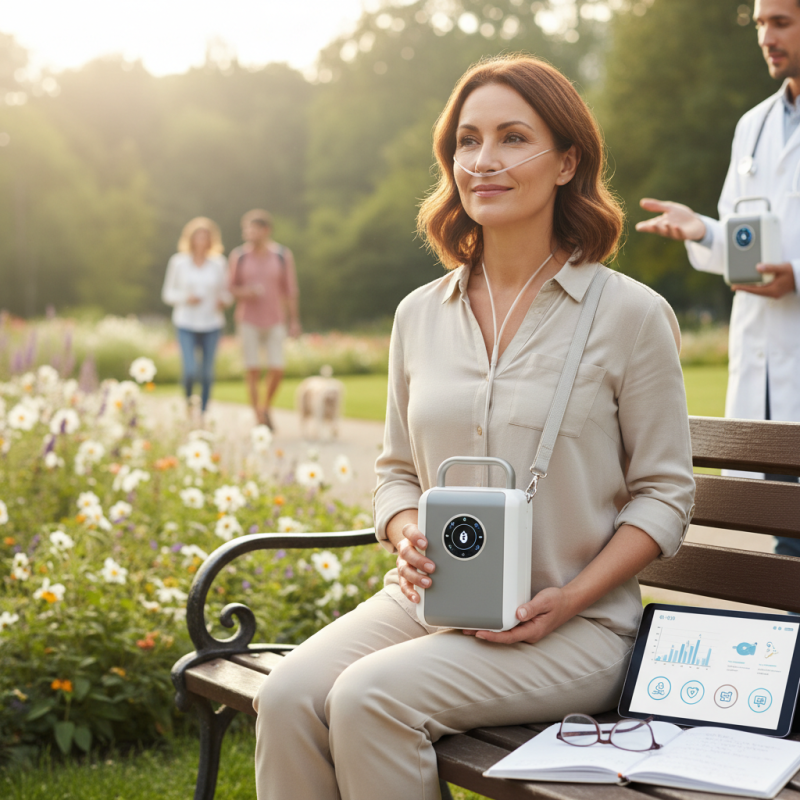
Choosing the right Portable O2 Concentrator is crucial for those needing supplemental oxygen. These devices offer freedom and mobility. They are designed for patients who require oxygen therapy on the go. With various models available, making an informed choice is essential.
When selecting a Portable O2 Concentrator, consider factors like weight, battery life, and flow settings. A lighter model is easier to carry, while longer battery life ensures uninterrupted use. It’s important to evaluate your daily activities to find what fits your lifestyle. Some people may overlook these details, leading to frustration later.
Additionally, read reviews and consult healthcare professionals. Their expertise can guide your decision. It’s not just about convenience; it’s about ensuring health and safety. Reflect on your options and seek a reliable device that meets your specific needs.
Understanding the Basics of Portable Oxygen Concentrators
Portable oxygen concentrators (POCs) are essential for many individuals with respiratory issues. Understanding how they work can guide better choices. A POC takes in ambient air, filters it, and delivers concentrated oxygen. This process ensures that users receive the necessary oxygen flow for their health.
The U.S. Food and Drug Administration (FDA) regulates oxygen devices to ensure safety. Studies show that consistent use of POCs can improve quality of life for over 1.5 million Americans with chronic respiratory conditions. It's crucial to know your oxygen needs. Most POCs deliver between 1 to 5 liters per minute. This variability in flow rates can affect daily activities and overall well-being.
When considering a POC, evaluate factors like weight, battery life, and ease of use. A study from the Respiratory Care Journal emphasizes the importance of portability. Weight is a critical factor. Many devices weigh less than 5 pounds, allowing for easier mobility. Yet, battery life can often fall short. Users may find themselves needing extra batteries for long outings, a regular concern among many POC users.
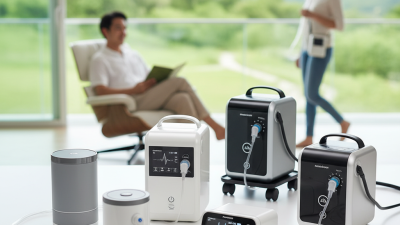
Portable Oxygen Concentrators Performance Comparison
Key Features to Consider When Choosing a Portable O2 Concentrator
When choosing a portable oxygen concentrator, several key features matter. Battery life is crucial. Look for models that offer extended runtime. This ensures you stay mobile without frequent recharges. A lightweight design enhances portability. If it’s too heavy, you may avoid taking it outside. Compact units fit easily into bags.
Consider oxygen flow settings. Some devices provide continuous flow, while others offer pulse dose. Your condition may influence this choice. A concentrator's noise level can also affect your comfort. A quieter model allows for discreet use in public spaces. User-friendly controls are important. Intuitive buttons make it easier to adjust settings quickly.
Warranty and customer support matter too. Reliable service helps when issues arise. Read reviews to gauge user experiences. This offers insights into the product's reliability. The cost is another factor, as prices can vary greatly. Finding an affordable yet effective option is key. Take your time to compare different models before purchasing. It's a big decision that impacts your daily life.
How to Choose the Best Portable O2 Concentrator for You? - Key Features to Consider When Choosing a Portable O2 Concentrator
| Feature |
Description |
Importance |
Considerations |
| Weight |
The overall weight of the device. |
High |
Choose a model that is lightweight for easier portability. |
| Battery Life |
Duration the concentrator can operate on a full charge. |
Very High |
Look for a device that provides sufficient hours for your activities. |
| Oxygen Flow Rate |
The rate at which oxygen is delivered, usually measured in LPM. |
High |
Select a flow rate suitable for your prescription and lifestyle. |
| Noise Level |
How loud the device operates during use. |
Medium |
Choose a quieter model for comfort in social settings. |
| Portability |
Features that enhance ease of travel, like carrying options. |
High |
Look for models with handles, carts, or backpacks for convenience. |
| Warranty |
Coverage period for the device against defects. |
Medium |
Check the duration and terms of the warranty offered. |
| Ease of Use |
How user-friendly the device is, including controls. |
High |
Choose models with intuitive controls and displays. |
Assessing Your Specific Oxygen Needs and Lifestyle
When choosing a portable oxygen concentrator, understanding your specific oxygen needs and lifestyle is crucial. The U.S. Centers for Disease Control and Prevention (CDC) reports that about 1.5 million Americans use supplemental oxygen. Many require different levels of oxygen throughout the day. Consider how often you engage in physical activities. Those with active lifestyles may need a concentrator with a higher flow rate. A device that meets your oxygen requirements while matching your daily activities is essential.
Moreover, assessing your lifestyle helps narrow down options. For example, frequent travelers benefit from lightweight and compact devices. The Oxygen and Nursing Care data indicates that 50% of users prioritize battery life when choosing a concentrator. If you often travel, look for a model offering extended battery support. Evaluate how long you spend away from home, and ensure your device can keep up with your lifestyle.
Personal preferences also matter. Consider portability—how often will you carry it versus use stationary? Some models might be sturdy but cumbersome. Regular users often reflect on limitations as well. Was the choice ideal for long-term needs, or did it fail during specific activities? Choosing wisely means understanding both current needs and future changes in health or lifestyle.
Evaluating Battery Life and Portability Options
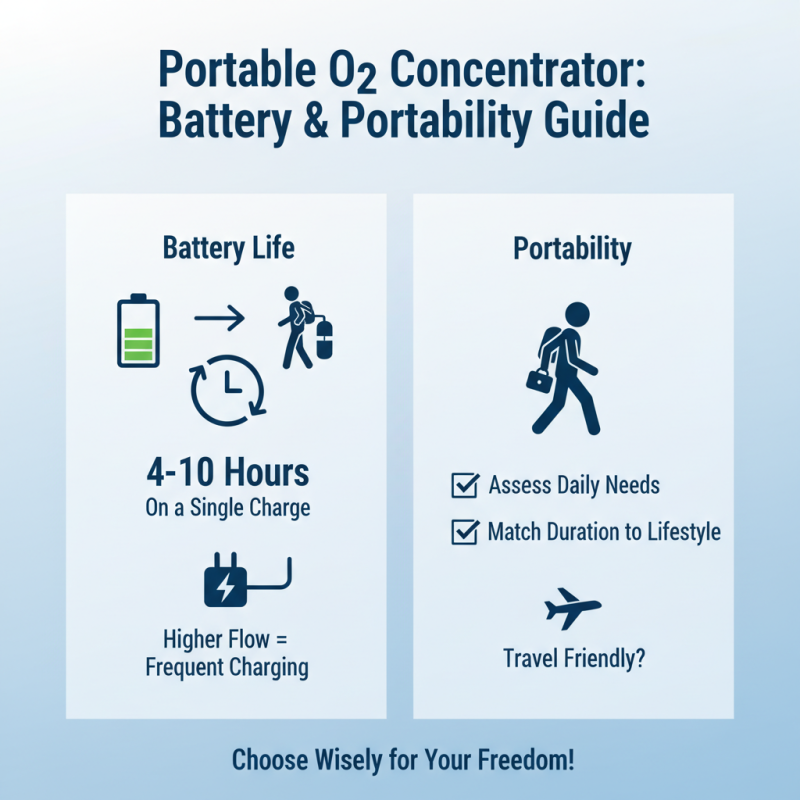
When choosing a portable O2 concentrator, battery life and portability are crucial aspects to consider. Understanding how long the device can operate on a single charge is vital. A typical portable unit offers between 4 to 10 hours of battery life. Assess your daily needs to figure out which duration suits you best. You might require frequent charging if you rely on higher oxygen flow rates.
Portability is equally important. Many models weigh between 2 to 10 pounds, affecting your comfort during transport. Look for units with ergonomic designs or carrying cases. Some devices also allow battery expansion for longer trips. Consider how often you travel and where you plan to use the concentrator.
Tips: Always check the device's weight before purchasing. A lighter model may be worth any additional cost for enhanced convenience. Additionally, think about the power source options available. Some concentrators provide AC and DC options, allowing flexibility for home and vehicle use. Remember, not all models perform equally in different environments, so research is essential.
Comparing Costs and Warranty Options for Portable O2 Concentrators
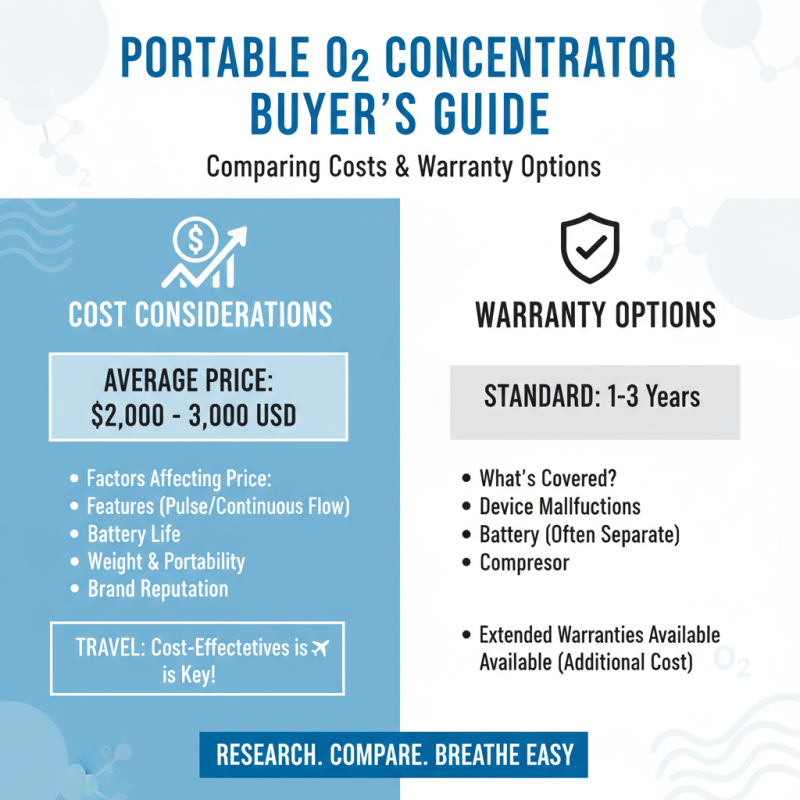
When selecting a portable oxygen concentrator, understanding costs and warranty options is essential. The average price for these devices ranges from $2,000 to $3,000. However, prices may vary widely based on features. Many patients require oxygen therapy while traveling, so the cost-effectiveness of these devices becomes a priority.
Warranty coverage can also significantly impact your decision. Typically, warranties last from one to five years. A product with an extended warranty may indicate higher durability. Reports suggest that 25% of users experience issues within the first year, underscoring the importance of warranty options. Weighing these factors can save you future expenses.
Research indicates that over 50% of patients do not fully understand their warranty coverage. This gap in knowledge can lead to expensive repairs or device replacements. An informed consumer is more likely to choose a reliable option that balances initial costs and long-term service. Understanding the total cost of ownership, including maintenance, is vital for proper decision-making.