Best Portable O2 Concentrators for Global Buyers in 2026?
In the world of medical devices, the "Portable O2 Concentrator" stands out as a vital solution for individuals with respiratory challenges. According to a market report from Grand View Research, the global portable oxygen concentrator market is projected to reach USD 2.3 billion by 2026, growing at a CAGR of 12.4%. This growth reflects the increasing need for mobility and independence among patients requiring supplemental oxygen.
Portable O2 Concentrators provide an accessible alternative to traditional oxygen tanks. Users benefit from lightweight designs and battery-operated features, enhancing ease of travel. Research published in the Journal of Respiratory Medicine indicates that these devices significantly improve quality of life for users by enabling them to engage in daily activities without the constraints of bulky equipment.
However, potential buyers should consider various factors before purchasing a Portable O2 Concentrator. Variability in oxygen output, battery life, and noise levels are crucial. Additionally, understanding the nuances of different brands and models can be challenging. Seeking expert advice or consulting user reviews can bridge this knowledge gap, ensuring informed choices are made for health and well-being.

Overview of Portable Oxygen Concentrators: Market Trends for 2026
The portable oxygen concentrator market is expected to grow significantly by 2026. Market research suggests a compound annual growth rate of over 10%. This growth is driven by an aging population and rising respiratory diseases. Many individuals need convenient solutions for oxygen therapy in daily life.
User-friendly designs are becoming essential. Consumers seek lightweight options that deliver high oxygen purity. Recent reports show that the demand for rechargeable models is increasing. These devices allow for a more flexible lifestyle. Their compact size fits well into travel routines. A focus on battery life will likely enhance user experience.
Tips: When selecting a portable oxygen concentrator, consider the weight and size. Look for models with long battery life to avoid interruptions. Additionally, check the oxygen output rate to ensure it meets personal needs. While many devices are innovative, always verify that they meet safety standards. New buyers should read reviews carefully. Each user’s needs may vary greatly.
Best Portable O2 Concentrators for Global Buyers in 2026
| Model |
Weight (lbs) |
Battery Life (hrs) |
Oxygen Flow Rate (L/min) |
Noise Level (dB) |
Price Range (USD) |
| Model A |
5.5 |
8 |
3 |
40 |
$2,000 - $2,500 |
| Model B |
6.2 |
10 |
5 |
45 |
$2,300 - $2,800 |
| Model C |
4.8 |
7 |
4 |
38 |
$1,800 - $2,200 |
| Model D |
5.0 |
12 |
3.5 |
42 |
$2,100 - $2,600 |
Key Features to Consider When Choosing a Portable Oxygen Concentrator
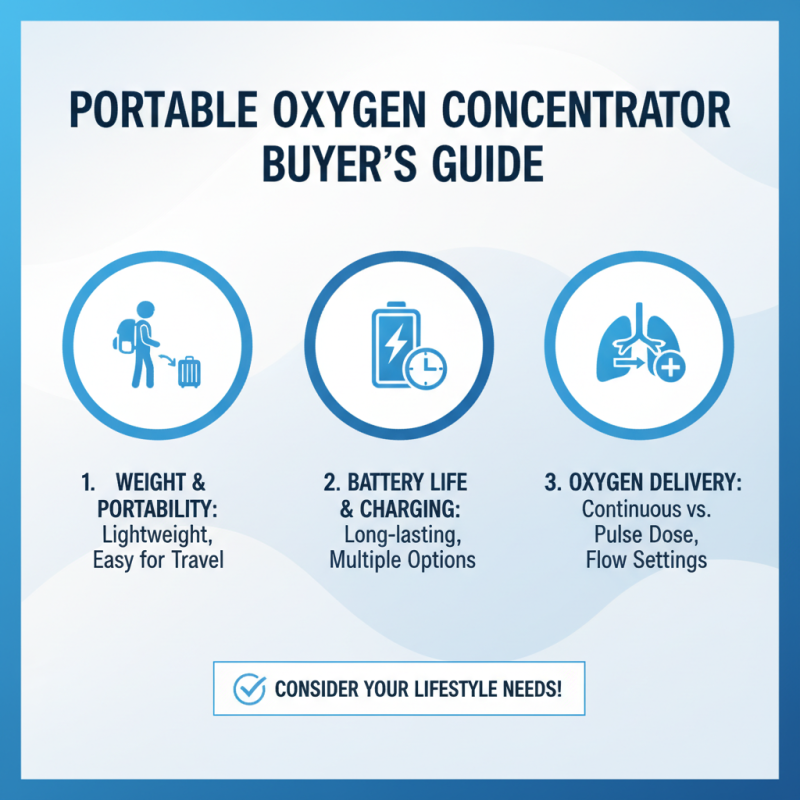
Choosing the right portable oxygen concentrator can be overwhelming. There are several key features to consider for your specific needs. First, look at the weight and portability. Many models are lightweight and convenient for travel. Ensure it fits comfortably in your luggage and can be carried easily.
Battery life is crucial. A concentrator with a long-lasting battery allows for uninterrupted use during outings. Some devices offer spare batteries; this can be a lifesaver. Also, consider the oxygen flow settings. Adjustable levels help tailor the device to your needs, ensuring optimal support.
Tips: Always check reviews and user feedback. Real experiences provide valuable insights on performance. Test the device if possible. Everyone's needs are unique, and hands-on experience is irreplaceable.
Quality and warranty should not be overlooked. Choose a concentrator that offers reliable customer service. Check if it has a good warranty, as this reflects the manufacturer's confidence. Remember, investing in a quality device is key to maintaining a healthy lifestyle while on the go.
Top Portable Oxygen Concentrators Reviewed: Performance and Reliability
Portable oxygen concentrators (POC) are essential for individuals needing supplemental oxygen. When assessing performance and reliability, several factors come into play. These devices must be efficient, lightweight, and user-friendly to cater to diverse lifestyles. Users often report wanting longer battery life and quieter operation. Many models excel in portability, but some fall short in oxygen output.
Reliability is equally critical. Users need equipment that won't fail them. Testing has shown that some POCs struggle under extreme conditions, such as very high altitudes or temperature fluctuations. Reports indicate that it's not uncommon for certain models to require frequent maintenance, causing inconvenience. Customers seek durable options that endure rigorous use over time.
Accessibility is crucial, too. Many consumers desire devices that are easy to transport and set up. A user-friendly interface can significantly affect overall satisfaction. However, a few marketed solutions lack intuitive designs, leaving users frustrated. Ensuring consistent oxygen delivery remains a priority. Finding balance in performance, reliability, and user experience is vital for anyone considering a portable oxygen solution.
Affordability and Insurance Coverage: Budgeting for O2 Concentrators
When considering a portable oxygen concentrator, affordability is a key factor. These devices can vary significantly in price. Understanding your financial situation is important. For many buyers, budget constraints play a critical role in the decision-making process. You want to find a balance between quality and cost.
Insurance coverage adds another layer of complexity. Many insurance plans partially cover oxygen therapy costs. However, coverage varies widely. It’s vital to review your policy before making a purchase. Determine what aspects are included and what expenses you must bear. This step can help manage financial expectations.
Additionally, the long-term costs of maintenance should not be overlooked. Regular check-ups and any necessary repairs can add up. Some users may find hidden fees when dealing with providers. It’s worth asking questions and doing thorough research. Eventually, the goal is to secure a device that is not only reliable but also fits comfortably within your budget.
Future Innovations in Portable Oxygen Technology: What to Expect by 2026
As we look toward 2026, the landscape of portable oxygen concentrators (POCs) is poised for dynamic evolution. Recent industry reports indicate that the global market for portable oxygen devices is expected to grow at a CAGR of 10.5% from 2021 to 2026. This growth signals a rising demand for innovative, user-friendly solutions that cater to a diverse demographic. Key improvements will likely focus on weight reduction, battery life, and efficiency in oxygen delivery.
Advancements in technology will lead to new features. For instance, next-generation POCs may integrate smart connectivity options. This could enable users to monitor their oxygen levels and machine performance in real time. Furthermore, enhanced filtration systems may significantly improve air quality, a critical factor for many users. However, the industry still faces challenges. Balancing portability with adequate oxygen supply remains a pivotal concern. Real-world testing in varied environments will be essential to ensure reliability.
Expectations should also include more ergonomic designs. Comfort is crucial, especially for long-term users. Increasing collaboration between healthcare professionals and manufacturers can drive this progress. Feedback from users can lead to better adaptations. Alongside innovation, price sensitivity will play a decisive role in product adoption across different markets. Ensuring accessibility while maintaining quality will be a challenge worth addressing.